
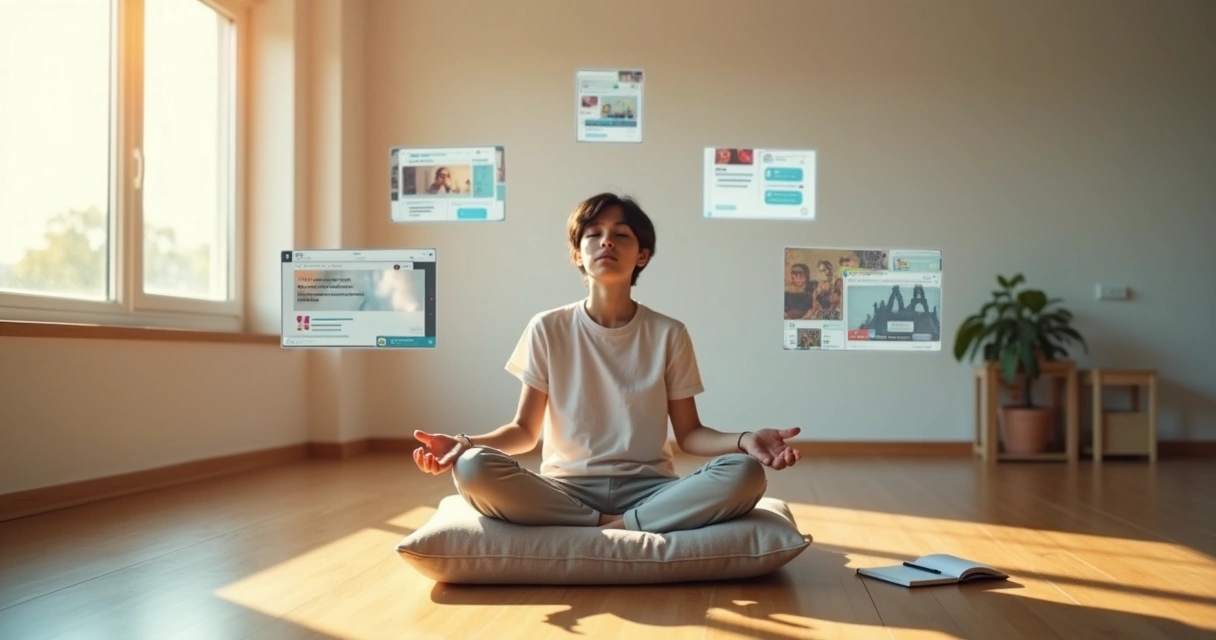
We live with screens close to our hands, our eyes, and often our thoughts. A message arrives and our body reacts before our mind has time to choose. A video ends and another begins. A quiet moment appears, and we fill it. Little by little, inner space gets crowded.
Digital detachment is not rejection of technology. It is the recovery of conscious choice.
We think many people do not notice the emotional cost of constant connection because it builds slowly. It does not always arrive as a crisis. Sometimes it arrives as scattered attention, thin patience, poor sleep, a short reply to someone we love, or the sense that even rest feels noisy.
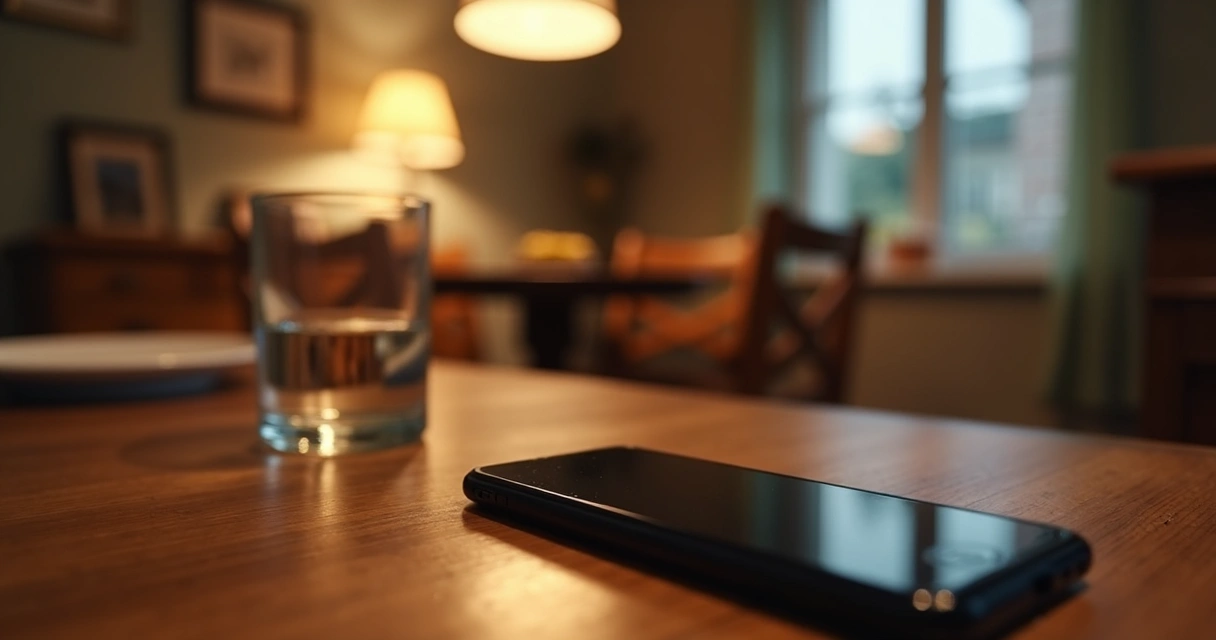
We have seen this in simple daily scenes. A person sits down for dinner, places the phone beside the plate, and says they are present. But each vibration pulls part of their awareness away. The body stays. The attention leaves. The relationship feels it, even when no one names it.
Why detachment feels hard
Digital habits are emotional habits too. We do not only check a device for facts or tasks. We check for relief, stimulation, validation, distraction, and escape from discomfort. When boredom appears, the hand moves. When anxiety rises, the screen promises quick distance from it.
This is why digital detachment can feel strange at first. The silence after constant input may reveal what was being covered. Restlessness. Sadness. Irritation. Mental fatigue. We may think the problem is the silence, when in truth the silence is only showing us what was already there.
Presence begins where compulsion ends.
We also need to speak honestly about sleep. Nighttime screen use is not a small detail. It shapes how we wake, feel, and relate. In a study of university students’ pre-bed smartphone exposure, the average phone use in the hour before bedtime was 75.8 minutes, and 70.1% reported poor sleep quality. Using phones for more than 60 minutes before sleep with lights on was linked to much higher odds of poor sleep, along with worse attention and concentration.
When the mind does not settle at night, emotional clarity weakens the next day.
What digital overload does to our inner state
When we are overstimulated, our responses become faster and less reflective. We interrupt more. We tolerate less. We absorb too much and process too little. In our view, this is one reason digital excess affects emotional maturity. It trains reactivity.
Not every use is harmful, of course. We can learn, connect, work, and care through digital tools. The issue is not the tool itself. The issue is whether we are acting or reacting.
Some signs of overload are easy to miss at first:
We reach for the phone during any pause.
We feel uneasy when there are no updates.
We struggle to read, listen, or pray without checking something.
We go to bed tired but cannot disengage.
We become emotionally flat after long periods online.
These signs matter because they point to a split in attention. And split attention weakens presence in every area of life, from work to family to self-observation.
How presence returns
We do not restore presence by force. We restore it by rhythm. A wise approach is gentle but firm. We create moments in which the nervous system is not being pulled in five directions at once.
This starts with boundaries that are realistic. If the plan is too extreme, it often fails by the third day. Better to begin with practices we can repeat.
We suggest a sequence like this:
Choose one screen-free period each day, even if it is only 20 or 30 minutes.
Remove the phone from meals, conversations, and moments of rest.
Set a clear stopping point at night for digital input.
Notice what feeling appears when the device is absent.
Replace the habit with a grounding act, such as breathing, journaling, or quiet walking.
The fourth step is often the most revealing. If irritation appears, we observe it. If emptiness appears, we stay with it a little longer. This is how detachment becomes emotional education instead of simple restriction.
We regain freedom when we can feel discomfort without rushing to numb it.
Small practices with deep effects
Many people think change only counts when it is dramatic. We disagree. In our experience, repeated small acts rebuild inner steadiness better than short bursts of strict control.
Here are a few practices that support digital detachment in daily life:
Keep the first 15 minutes of the morning free from notifications.
Charge the phone outside the bedroom.
Use one day part, such as lunch or early evening, as protected offline time.
Turn off non-urgent alerts that train constant anticipation.
Pause before unlocking the screen and ask, “Why am I opening this now?”
These actions look simple. They are simple. But simplicity has force when it is repeated. Over time, attention becomes less fragmented. Thoughts slow down. Feelings become easier to name. Speech becomes less impulsive.
A broader public concern about this is visible as well. In a national survey on smartphone habits and perceptions, 26% of U.S. adults said they use a smartphone almost constantly, and that rose to 42% among ages 18 to 29. About 41% said smartphone use hurts the amount of sleep they get, while 22% said it hurts their mood. Those numbers show that many people already feel the emotional and physical strain.

Detachment and emotional maturity
Digital detachment is not only about reducing noise. It is about becoming more responsible for the state we bring into our relationships. If we are flooded, we speak from flooding. If we are settled, we listen better, choose words with more care, and create safer exchanges.
We have noticed that people often want better communication while protecting the very habits that weaken it. They want more patience, but sleep with a glowing screen. They want deeper connection, but divide every conversation with alerts. They want peace, but carry stimulation into every empty space.
That pattern can change. Not all at once. Still, it can change.
Conclusion
Digital detachment invites us back to ourselves. It helps us notice where our attention has been captured, where our emotions have been dulled, and where our reactions have become too quick. The goal is not perfect control. The goal is cleaner presence.
When we step back from constant input, we often recover more than time. We recover sensitivity, rest, discernment, and the ability to stay with life as it is. That is where emotional clarity begins. Quietly. Honestly. One boundary at a time.
Frequently asked questions
What is digital detachment?
Digital detachment is the practice of creating healthy distance from screens and online stimulation so we can think, feel, and relate with more awareness. It does not mean abandoning technology. It means using it with intention instead of habit.
How can I practice digital detachment?
We can practice it by setting screen-free times, keeping phones away from meals and bedtime, turning off non-urgent alerts, and pausing before opening apps. It also helps to replace screen checking with a calming action such as writing, breathing, stretching, or walking.
Is digital detachment worth trying?
Yes. For many people, it creates more calm, better sleep, and clearer attention. It can also reveal emotional patterns that were hidden by constant distraction, which gives us a real chance to respond with more maturity.
What are benefits of digital detachment?
The benefits may include better sleep, stronger focus, less irritability, deeper conversations, and more mental space. Many people also notice a greater sense of presence in daily life, especially during rest, relationships, and reflective moments.
How does digital detachment improve emotions?
It improves emotions by lowering overstimulation and giving the nervous system more room to settle. When we are less flooded by input, we can identify feelings more clearly, react less impulsively, and respond with greater balance.