

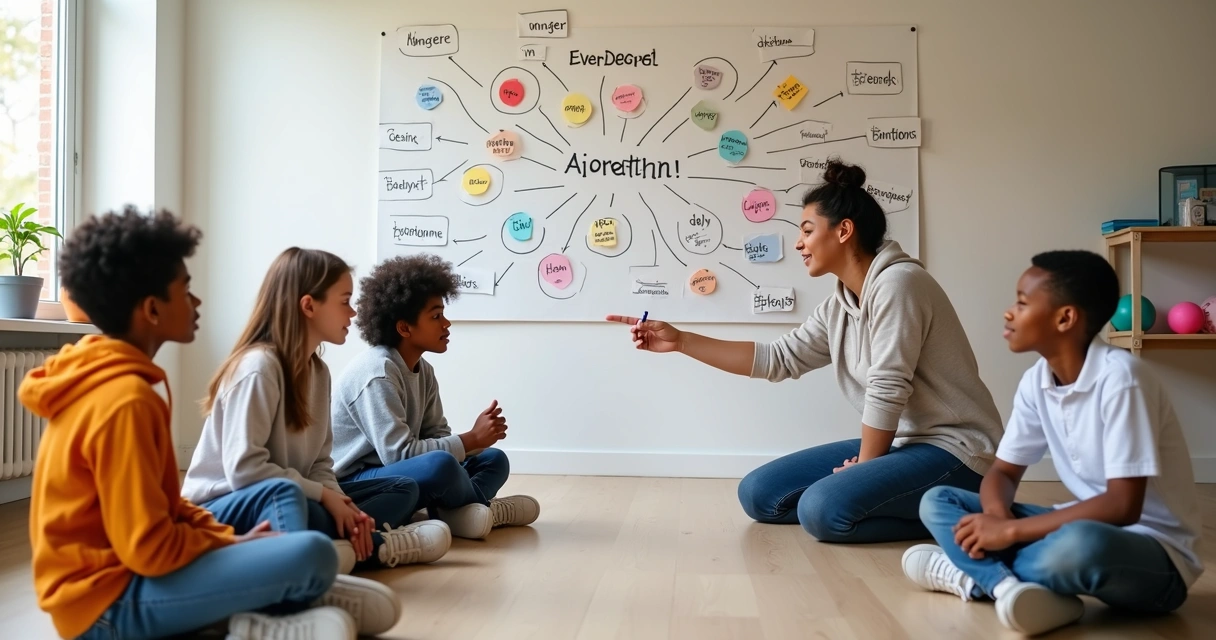
Teaching emotional literacy to teens is not about making them softer. It is about helping them become clearer, steadier, and more honest with themselves and others. We have seen that when teens can name what they feel, they react less on impulse and speak with more truth. That changes friendships, family life, and school climate.
Adolescence is intense. A small comment can feel huge. A silence can feel like rejection. A bad day can turn into a full storm. That is why emotional literacy matters so much in these years. When teens learn to read their inner world, they gain more choice in how they respond.
This does not happen through lectures alone. Teens usually learn emotional language through lived moments, trusted adults, and repeated practice. We need to teach it in a way that feels real, not forced.
What emotional literacy means in real life
Emotional literacy is the ability to notice, name, understand, express, and manage feelings with care. It also includes reading the emotions of others without jumping to harsh conclusions.
In our experience, many teens know broad words like sad, angry, or stressed. But when we slow the moment down, we often find more precise feelings under the surface. A teen who says, “I am mad,” may actually feel embarrassed, excluded, powerless, or afraid.
Words change awareness.
Emotional literacy gives teens a fuller vocabulary for their inner experience. That vocabulary helps them ask for support, set limits, and deal with conflict with less damage.
This matters on a wider level too. A report on youth mental health and social and emotional learning in schools notes that about 1 in 5 teens in the United States experience symptoms of anxiety or depression. When schools and families teach emotional skills early, teens are more likely to get support before distress grows.
Start with safety, not correction
Many adults teach feelings in the middle of conflict. We do it when a teen has already slammed the door, snapped at a sibling, or shut down. That is often too late for learning. In that moment, the nervous system is in defense mode.
We get better results when we build safety first. Teens need to sense that emotions are welcome, even when behavior still needs limits. We can say, “We can talk about what happened. You are not in trouble for having feelings. We do need to talk about what you did with them.”
This simple shift changes the tone. It separates emotion from action. It tells teens that feelings are human, while responsibility still stands.
Here are a few ways to build that base:
Use calm voice and steady body language during hard talks.
Avoid mockery, labels, or dramatic reactions.
Pause before asking for explanations when the teen is upset.
Show curiosity instead of rushing to judgment.
Safety does not mean permissive parenting or weak boundaries. It means the teen can stay connected while learning.

Teach the skill in small steps
Emotional literacy becomes easier when we break it into simple parts. We do not need a perfect system. We need a repeatable one.
We often use this sequence:
Notice the body signal.
Name the feeling.
Link it to the trigger.
Choose a response.
For example, a teen comes home quiet and tense. Instead of asking, “What is wrong with you?” we might ask, “What are you noticing in your body right now?” The answer might be, “My chest feels tight.” Then we can move to feeling words such as nervous, ashamed, annoyed, or hurt. After that, we ask what happened. Only then do we discuss what to do next.
Teens learn emotional literacy faster when adults teach a process, not just a list of feeling words.
This step-by-step approach also matches what research suggests. A systematic review and meta-analysis on adolescent mental health literacy interventions found that universal educational programs can improve mental health literacy, even if short-term changes in anxiety and depression are more limited. That tells us something useful. Knowledge helps, but it must be followed by practice, repetition, and lived support.
Use activities that do not feel childish
Teens often resist anything that feels too cute or too scripted. We have found that the best activities are simple, respectful, and tied to real situations.
These methods tend to work well:
Emotion check-ins: Ask teens to choose three words for their current state and explain one of them.
Scene review: After a hard day, walk through one event and ask what they felt at each stage.
Music reflection: Use a song lyric to discuss mood, conflict, or unmet needs.
Journal prompts: Questions like “What did I feel but not say today?” often open honest insight.
Role-play: Practice how to disagree, apologize, or ask for space with respect.
One teen we worked with could not talk face to face at first. But he could write. A short daily note became his bridge. At first it was one line. Later it became real reflection. Sometimes the door opens quietly.
Model the language you want them to use
Teens notice more than they admit. If we want them to speak with emotional honesty, we have to do it too. Not in a dramatic way. In a grounded way.
We can say things like:
“I am frustrated, so I need a minute before we keep talking.”
“I felt hurt by that comment, and I want to respond with care.”
“I was anxious this morning, so I got short with you. I am sorry.”
This shows that feelings can be named without blame. It also teaches repair. Teens do not need perfect adults. They need honest adults who can reflect, regulate, and return.
Name it. Then guide it.
Correct harmful behavior without shaming feelings
Some adults fear that emotional teaching will excuse bad behavior. It should not. In fact, it should increase accountability.
If a teen yells, lies, or lashes out, we can hold a clear line while still working with emotion. We might say, “Your anger is real. Breaking trust is still not okay. Let us look at what happened before that choice.” This keeps dignity intact while dealing with the act itself.
The goal is not to suppress emotion, but to separate feeling from harmful action.
That difference is where maturity starts. A teen who learns this can feel strong emotion without turning every emotion into damage.

Make it part of daily life
Emotional literacy grows through repetition. We do not need long sessions every day. A few consistent moments are often enough.
We can build it into normal routines:
During dinner, ask what felt heavy and what felt good today.
After conflict, return later and name what each person felt.
Before bed, invite one sentence of reflection without pressure.
On the way to school, ask what emotion may show up today.
These moments seem small. They are not. They teach teens that emotional awareness is not only for crisis. It belongs in ordinary life.
Conclusion
Teaching emotional literacy to teens is a patient practice. We are not trying to produce perfect self-control. We are helping young people become more aware, more responsible, and less ruled by what they cannot name. When we offer safety, simple tools, respectful activities, and honest modeling, teens begin to understand themselves with more depth.
And that changes how they speak, relate, and choose. Slowly at times. Suddenly at others. But it changes.
Frequently asked questions
What is emotional literacy for teens?
Emotional literacy for teens is the ability to notice, name, understand, express, and manage feelings in healthy ways. It also includes recognizing emotions in other people and responding with more awareness.
How to start teaching emotional literacy?
We can start by using simple feeling words in daily conversations, asking open questions, and helping teens link body signals to emotions. A calm and non-judging tone makes the first steps easier.
What are the best activities for teens?
Good activities include emotion check-ins, journaling, role-play, music reflection, and reviewing real-life situations after they happen. These methods work best when they feel respectful and connected to daily life.
Why is emotional literacy important?
It helps teens communicate better, handle conflict with less harm, and make clearer choices under stress. It also supports mental well-being by giving them words and tools for what they experience inside.
How can parents support emotional literacy?
Parents can support emotional literacy by modeling honest emotional language, listening without rushing to fix everything, and setting clear limits without shaming feelings. Short daily conversations often have a strong effect over time.